Artistic Statement
 I have lived and worked in several languages, including French and Greek. Filmmaking (the visual) is another language I have studied and worked with creatively.
My mother tongue of Greek, father tongue of English, and the language I chose to immerse myself in –French–shake around in my head and fizz, creating patterns that shape how I view my own history and how I see others and even contemporary events in the wide world.
I was born in New England to Greek parents, so I’m a first generation Greek American. I’ve also spent a lot of time in France as an adult (six years) where I worked in the film industry, read a lot of Proust and Henry James, and was greatly influenced by the poetry of their prose. I was also changed by the films I saw in Paris, by Tarkovsky, Bresson, Bergman, and Antonioni.
I lived in Europe in the early 1990s, and worked several jobs, including on-set translating between Greek, French & English in Athens, serving as a location scout, and working as a production assistant and assistant producer. I attended several European film and TV markets in Cannes over a period of a few years.
I had the privilege of meeting and learning from the late American expatriate poet Gustaf Sobin who lived in Provence, corresponding with him and eventually visiting him on a number of occasions. I did research with the aim of making a short film about him. In one of my poems, I refer to a town near where he lived—called Ménerbes, from the Latin Minerva, which is Athena. Traces of classical Mediterranean culture are to be found throughout the Provençal landscape. These fragments and layers of culture inspired his writing, and also my own.
◊◊◊
Many of my poems are sparked by a visual image, one that feels permeated by a sense of time, by an undefinable emotion that defies me to write about it.
I’ve been a literary filmmaker and I’m a visual poet.
After reading The Elsewhere Community, a late lecture by Hugh Kenner, the Modernist scholar, I located myself and my writing within the cultural tradition he describes. Kenner relays this statement by Aristotle:
“All humans, by their nature, desire to know. A special and unparalleled way to know is to go where you’ve never been.” In going there, Kenner notes, you join “the Elsewhere Community:”
“[The Elsewhere Community] can name where you dream of going—where bluebirds fly, perhaps. Or it can describe the people you’ve met somewhere, memories of whom have helped change you. Or it’s an awareness of your own growth and change, arising from the places you’ve been: Rome’s Sistine Chapel, perhaps, or the Zen Gardens of Kyoto…”
As a first-generation urban American daughter of parents from a small village in Greece, I have a dual perspective on the New World and the Old World. In some sense, my poetry situates itself in this “Elsewhere Community”—somewhere between East and West, between icons and words.
Mina Loy wrote of her poetry’s neologisms and foreign language words: “I was trying to make a foreign language because English had already been used.”
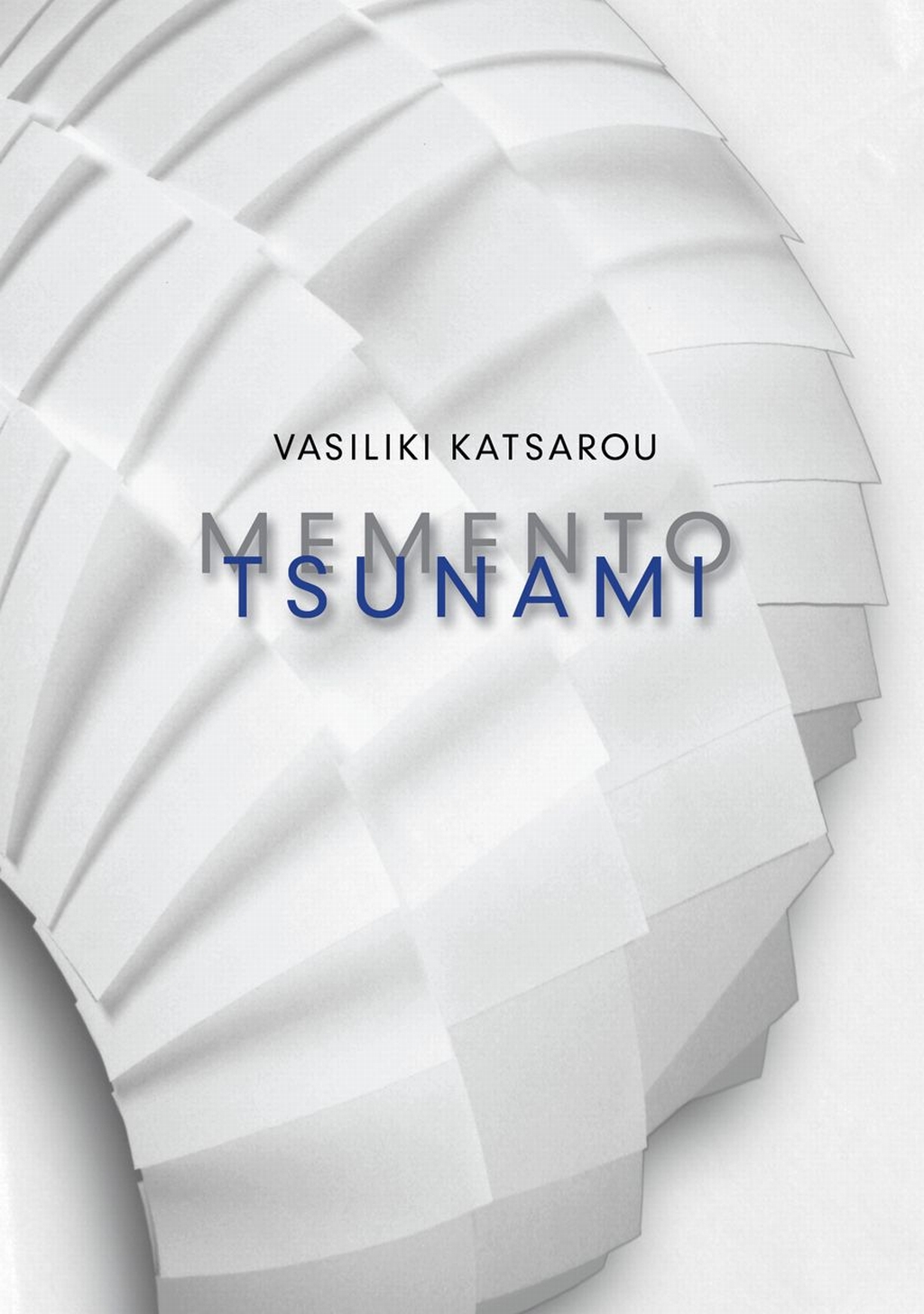
The title of my collection, Memento Tsunami, in some way engages with Loy’s thinking, in that I purposely mix words from different lexicons: the Latinate West of memento and the Asian East of tsunami.
◊◊◊
My poems often come together from fragments.
As many immigrant children can testify, when there is an uprooting, separation causes family stories to be fractured. My mother is one of five children who grew up in a small village several hours north of Athens. She and my father had an arranged marriage. Some of the poems I write are an attempt to recover or reconstruct my family history.
In addition to the concerns of literary and artistic modernism, the aesthetics of folk art provide inspiration for me. My family’s legacy includes exquisite handwork by grandmothers and aunts: woven bedspreads, embroidery, and dressmaking. I’m also fascinated by the stories told by American quilts that Roberta Smith in the The New York Times describes as “effortlessly combining personal and national histories with an exceptional kind of down-home formalism all the while using available, often humble fabrics…they encourage a free range of pictorial expression outside of painting’s traditional boundaries.” (5/12/11)
I’d like to think my poems exhibit a similar sort of “down-home formalism” while also remaining humble and accessible.
The tension between fragments and the whole underpins much of what I write. In Lewis Hyde’s seminal book, The Gift, he points to Coleridge’s view of the poet’s imagination “having the power to assemble elements of our experience into coherent lively wholes; it has a gift.”
I write poems with an awareness of the flow of time, of generations, of the flotsam and jetsam of our culture, and the rising tide of memory.
In my writing I never set out to reduce an experience into words, or to make something explicit. I am aware of the power of language and also the limitations of human reason. I am in awe of the beauty of the natural world and also the mysterious creativity of human beings. I try to float the mystery across…