Books & Anthologies
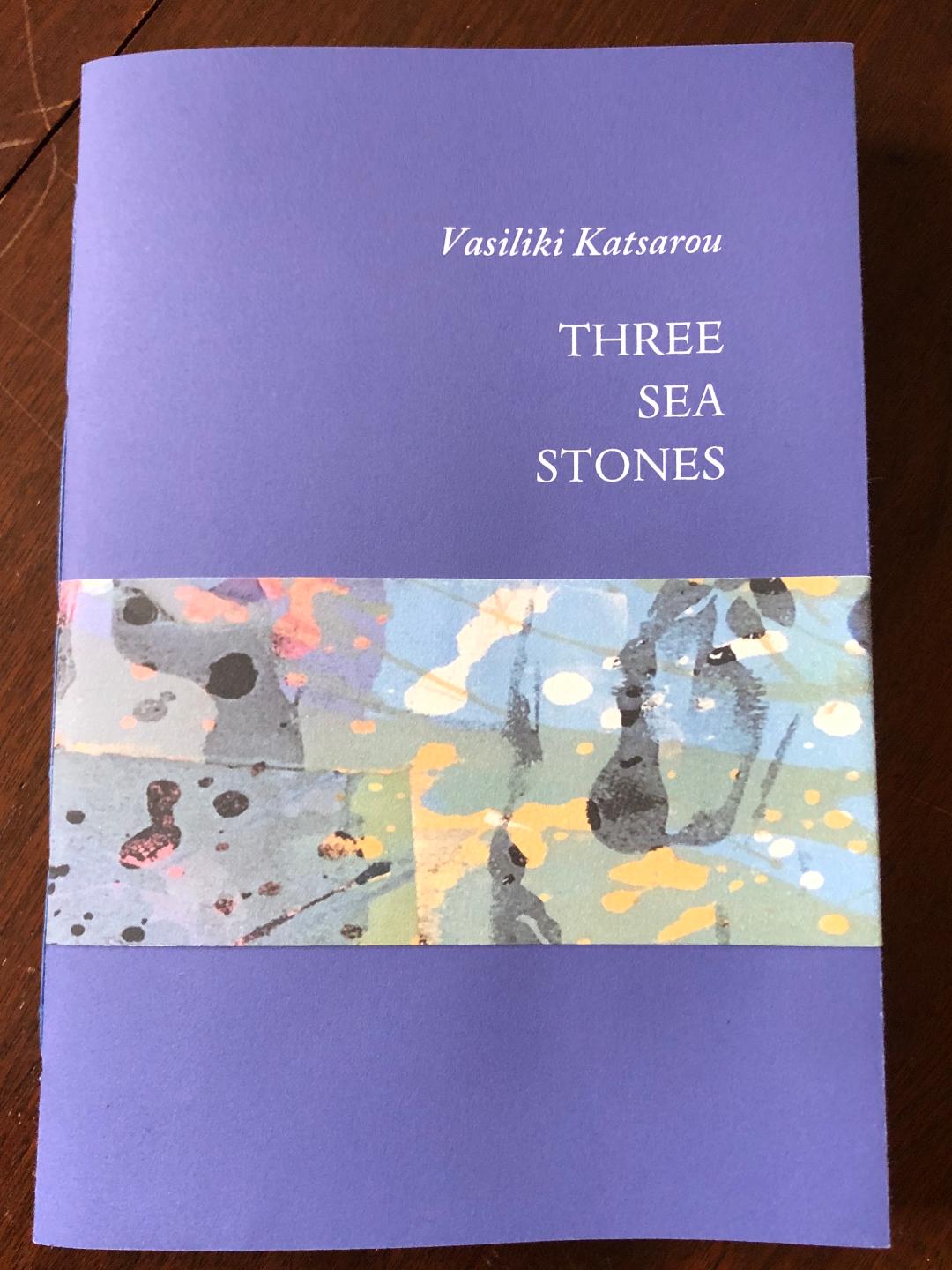
Big news! I’m excited to announce that my new chapbook, Three Sea Stones, will be published in Spring 2020 by MaryAnn L. Miller’s Lucia Press. MaryAnn is a wonderful book artist, printmaker and poet, whose artist books are in the collection of many museums and university libraries, including the Smithsonian. I feel fortunate to know MaryAnn for over a decade and I am delighted that she will publish Three Sea Stones. For updated reading details please see my landing page.
To order, please contact https://luciapress.com/ or me at <cineutopia@gmail.com>
I also have completed a translation of Franco-Swiss poet Philippe Jaccottet’s La Promenade Sous Les Arbres, a long lyrical essay and ars poetica. Please contact me for more details.
My first poetry collection, Memento Tsunami, was published by Ragged Sky Press.
My poems have appeared in a number of anthologies. Scroll down for more details.
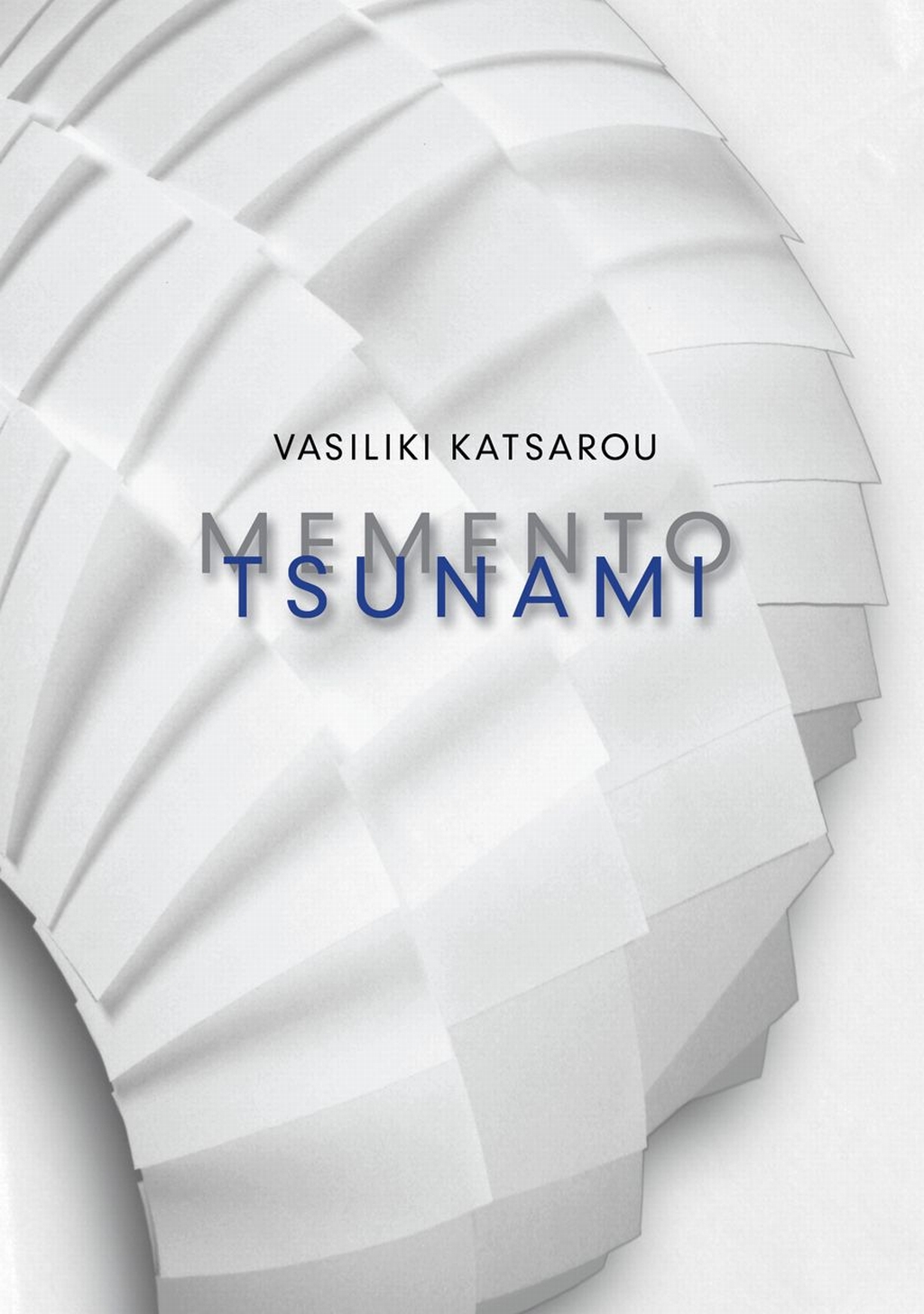 Memento Tsunami is a collection marked by startling abstract and lyrical poems that draw from a wide variety of cultural influences. These include my Greek heritage, background in European filmmaking, as well as a childhood among the ghosts of New England Transcendentalism. My work reflects a nostalgia for origins as well as a 21st-century visionary impulse to reconcile disparate worlds.
Memento Tsunami by Vasiliki Katsarou
Ragged Sky Press, Princeton NJ
9781933974101, trade paperback, $16
Available from these independent booksellers:
Clinton Bookshop, Clinton, NJ
The Book Garden, Frenchtown, NJ
Panoply Books, Lambertville, NJ
Grolier Book Shop, Cambridge MA
And also from the publisher: Ragged Sky Press, Princeton, New Jersey
Praise for Memento Tsunami:
“Reading Vasiliki Katsarou’s poetry is like watching an exquisitely made film: so beautiful are the images moving through time that you want to pause and let your eyes luxuriate over each frame; so beautiful is the music that you don’t want the movement to stop. We hear echoes of Sappho, Emily Dickinson, H.D., Mina Loy, and Lorine Niedecker, whose beautiful poetry, like Katsarou’s, is crafted with classical discipline, yet is not merely beautiful, nor merely classical. Memento Tsunami is breathtaking and reads as sustained filmic meditation on the woman artist, ancestry, the immigrant daughter’s unfixed, hyphenated identity, a world where an iPod becomes an i (a self, perhaps) and a pod (a natural thing, perhaps), where everything, each particular the poet places just so—sublimely—on the page might be poised for flight and the possibility to “embody // velocity.” —Aliki Barnstone, author of Dear God, Dear Dr. Heartbreak and The Collected of C.P.Cavafy: A New Translation
“These poems never say a word too much, but their language, by turns wry and musical, playful and gorgeous, is not minimalist at all. They are at once precise and vivid. They speak with an elliptical urgency.” —James Richardson, author of By the Numbers: Poems and Aphorisms
It’s a heady concoction Vasiliki Katsarou offers us in Memento Tsunami: musical, playful, polyglot, mindful of how history and passion are coming to overtake us. Supple and delicate, her poems speak the language of the world and time traveler who appeals to all ears and minds. After delighting in these poems, now tender, now elegiac, now goofy, now celebratory, the thankful reader may well echo one of those poems: “all this has been given for us.” —John Timpane, Books Editor, Philadelphia Inquirer
“In ‘Dab of Blue Paint,’ Vasiliki Katsarou asks, “What then are we to do/with all those moments/ when the eye stops the heart?” Memento Tsunami is her answer, poems that catch “that glint of beauty going by” as they tumble on the “giant wave” of memory.” —Lois Marie Harrod, author of Brief Term
“The denotation of “memento” is that it may be a keepsake, but it can also be a warning(… ) Katsarou’s poems are all of these, but coupled with the connotations of “tsunami,” they are also about what overtakes and overcomes us, what crashes through our lives, and what is left in the wake, how “all the homes of childhood are nowhere,” but in the morning after we “think…our selves more alive.” She seeks to connect dots across histories and memory in these “moon-loosened” lyrics rich with sensuality and image. —Laura McCullough, author of Panic
What other readers say about Memento Tsunami:
“Beautiful work. While completely authentic, it seems to stand at the interstices between all languages. And like Char and Ponge, you care about words as things in themselves, in the architecture of the natural world. The poems are landscapes and the landscapes are poems.”
◊◊◊
“A beautiful book. Seemed so wonderfully light-filled even as it asks many questions of language.”
◊◊◊
“I love the economy of language, those lingering silences, and the themes of motherhood, family, love and longing.”
◊◊◊
“I am a Sappho fan and often your poems had the feel of Sappho fragments.”
◊◊◊
“The collection is transformational.”
◊◊◊
“Nice, light touch that keeps resonating. Like a feather on an anvil.”
◊◊◊
“Worldly, funny, elegant, puzzling.”
◊◊◊
“I love the elegant multilingual vocabulary, your subtle word and sound plays, the surrealism and very cool use of film editing and film production references.”
◊◊◊
Anthologies:
My poem “Terrarium” appears in this recently published anthology of Freud in Poetry. My gratitude to the editor, Irene Willis!
You don’t have to be a Freudian to enjoy this provocative selection of poetry by Toi Derricotte, Anne Carson, Alicia Ostriker, Louise Glück, David Lehman, Lynn Emmanuel, and many others. #womenpoets #indiepublishers
To order: IPBooks.net

Co-Editor, Dark as a Hazel Eye: Coffee & Chocolate Poems
2016, Ragged Sky Press, Princeton, NJ I co-edited this anthology of poems about coffee and chocolate. A delicious dip into contemporary poetry. To order: Ragged Sky Press or Amazon.

Rabbit Ears: The First Anthology of Poetry about TV
Edited by Joel Allegretti. NYQ Books, 2015.
128 poems by 129 poets, with one collaborative poem.


I co-edited this stylish anthology of contemporary poems:
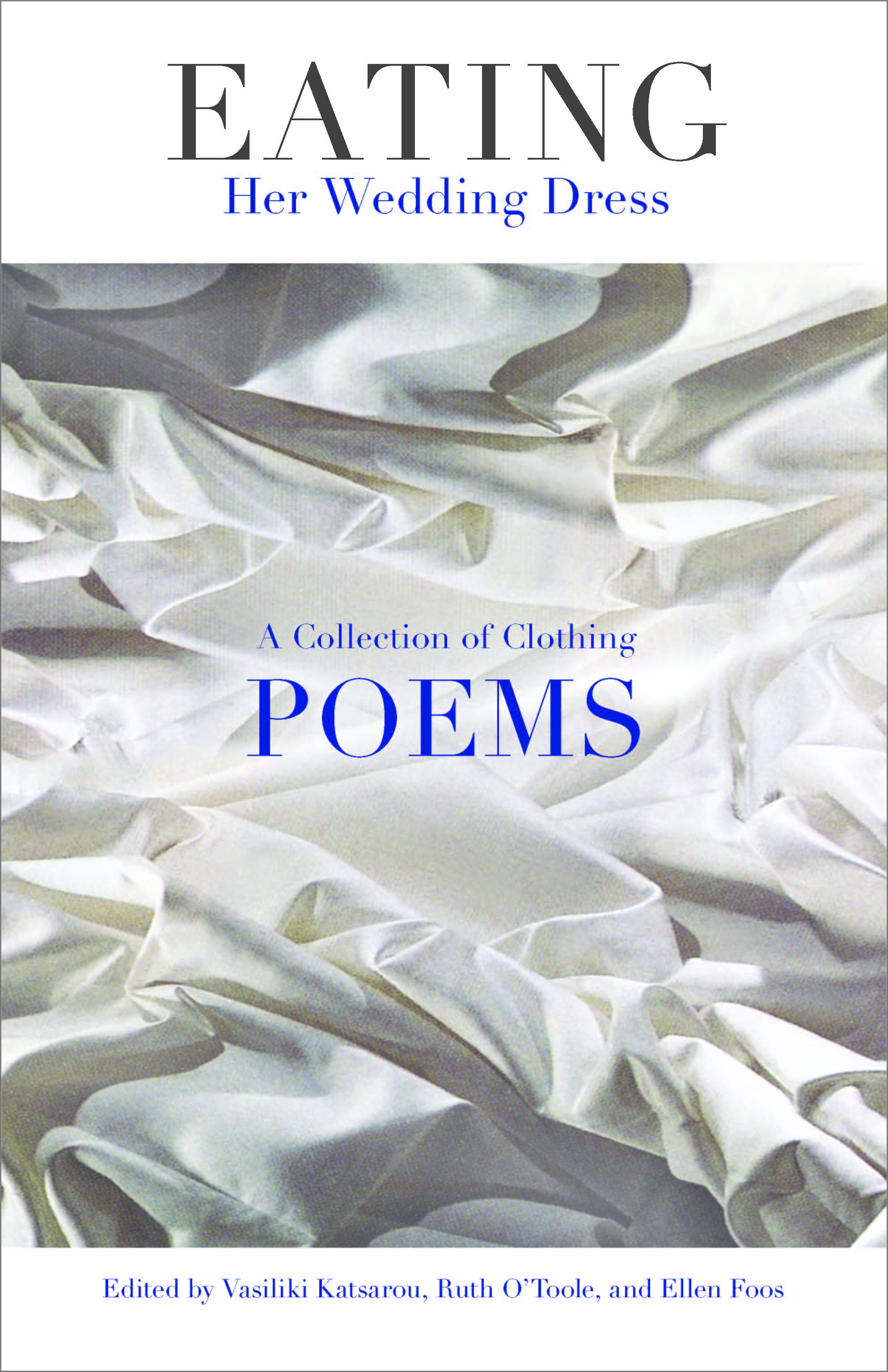 Eating Her Wedding Dress: A Collection of Clothing Poems
Ragged Sky Press, Princeton NJ.
Edited by Vasiliki Katsarou, Ruth O’Toole, and Ellen Foos.
Introduction by Vasiliki Katsarou. 2009.
100 contemporary poets—local stars and literary luminaries such as Kim Addonizio, Margaret Atwood, Billy Collins, Elaine Equi, Jorie Graham, Maxine Kumin, Paul Muldoon, and Charles Simic—join together to celebrate clothing in its many forms and functions: as desire, as ghost, as body, as poetry, as talisman, as transformer of the soul.
 Not Somewhere Else But Here: A Contemporary Anthology of Women & Place
Edited by Erin Elizabeth Smith, T.A. Noonan, Rhonda Lott, and Beth Couture
Eclectic and engaging multi-genre anthology of contemporary women writers. 300+ pages.
“The writing in Not Somewhere Else But Here is at turns haunting and infused with a deep magic. The work carries the reader from Beirut to Vermont, from Japan into dream worlds, bodies as maps. Landscapes are often treacherous, populated with ‘mouths of razor-wild men’, enchanted with ‘fists opened to explosions of diatomic stars,’ and each woman in this collection navigates those spaces with a deft grace. Step into the worlds they have summoned.” -Margaret Bashaar, Editor of Hyacinth Girl Press

Ode to Hunterdon: Poems by Hunterdon County Poets
Lucia Press, Clinton, NJ (2014)
Commemorative anthology celebrating Hunterdon County’s Tricentennial. Hunterdon poets share works reflecting the county’s beauty and its grit, from the extraordinary to the mundane. Poets included are Lois Marie Harrod, Juditha Dowd, John Richard Smith, MaryAnn Miller, Ray Brown, Vasiliki Katsarou, Basil Rouskas, Kathe Palka, Ravenna Taylor, Skye Van Saun, Paul Matthews, Warren Cooper, Gerald Stern, and Anne Marie Macari.